Choose Your Own Adventure Recipe: Sherbet

Sherbert-1

Sherbet may sound like something your grandmother would serve you, but it’s actually a pretty sexy dessert. Cold, creamy, and so easy to make, sherbet is like the perfect hybrid of ice cream and sorbet. It’s bright and fruity, but also decadent and creamy, the perfect summer treat, if you make it yourself. Sherbet is slowly edging its way back into style. If you’re lucky enough to live in New York you should try the yuzu sherbet at ChikaLicious or the black raspberry sherbet at Sundaes and Cones, but wherever you live, you should really try to make this treat at home. It’s a snap, a breeze, and perfect for creating your own flavors.

Unlike most ice cream and sorbet recipes, it requires zero time seeping, boiling, or otherwise sweating over a hot stove.

The recipe below works well with fruits that are not too acidic and have a medium water content. The high water content of melons, or the extremely low one of bananas or avocado will affect the texture. The acidity of citrus fruit can curdle the dairy, and requires special consideration. For best results, choose one of the options offered below.

I made this lovely Strawberry Lavender Vanilla Sherbet this weekend, and it was bright, fruity and fluffy. Try one of the suggested flavors below or think up a combo of your own. Let me know how it goes!


Choose Your Own Adventure Sherbet

(adapted from Brooklyn Supper)

½ c. sugar (granulated sugar or evaporated cane juice)

¼ – 1 tsp. of flavoring* (seeds from 1 vanilla bean, zest from one citrus fruit, dried edible flowers such as rose or lavender, finely chopped fresh herbs, warm spices such as cinnamon or nutmeg)

4 c. chopped fruit* (strawberries, blueberries, raspberries; skinned peaches, apricots or nectarines, mangoes, cherries)

1 c. cream (heavy whipping cream, coconut cream, cashew cream)

pinch of sea salt.


Chill a metal bread pan or other container in the freezer. Place ½ cup of sugar in a medium bowl and add in the flavoring. Mix with finger, rubbing together to combine thoroughly. Toss in fruit, mix well and let it macerate for about 10 minutes. In the meantime, pour cream into a separate large bowl and whip until you’ve formed soft peaks. Pour fruit mixture into a blender or food processor and puree until smooth. Pour over cream and fold together gently. Scoop into the bowl of an ice cream maker and freeze according to manufacturer’s instructions. Scoop into prepared pan and freeze at least an hour before serving. When ready to eat, allow sherbet to soften for a few minutes on the counter before scooping.


*If you’re feeling bold, you can mix two!


Suggested Combinations:

Strawberry, Lavender and Vanilla (pictured above)

Peach Mint

Cherry Lime

Apricot Rose

Blueberry Cinnamon


Needing and Craving

il_fullxfull.271112057

Image by Instagram user illustrationsbymajali

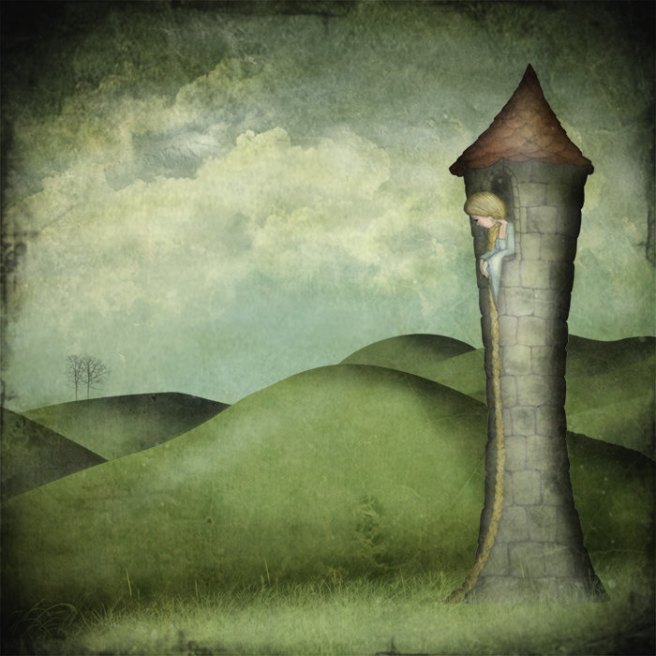
Fairy tales are full of irrational desires from Rapunzel’s mother longing for a taste of the witch’s garden, to Cinderella’s yearning to attend the ball. A number of scientific studies on cravings over the last ten years have reveal a variety of causes for desiring. I tend to think of craving as being primarily related to food, but I often crave other things: companionship, affection, change of scenery.

Sometimes yearning seems like and expression of boredom or self-sabotage, these longings are easier to resist. Other times, my desires feel more akin to need, as if my body is communicating some sort of deficiency. These cravings are the most satisfying to give into, although I have no way of knowing whether how I perceive a particular desire has any correlation to necessity.

There is a theory that the foods we crave are actually the ones we are intolerant to. If our body finds a food difficult to break down, it floods our brain with pleasure hormones to counteract the stress, which makes us want them again.

But a competing theory supposes that our desire for a specific food is biologically, that our desires are predisposed and reinforced by early life eating habits.

Some evidence supports need as a cause of cravings, but even when there is a connection between need and want, the longings are usually distortions of deprivations: wanting sweets when blood sugar is low, craving french fries when the body needs salt.

Fairy tales offer unexpected outcomes to succumbing to longing. The princess desperate for her golden ball ends up with a handsome prince while the mother who longs for a child black as ebony, white as snow and red as blood ends up dead.

I often associate craving with guilt. I feel bad for wanting, especially when I want what is bad for me. Since discovering I have a wheat intolerance, I crave pizza and sandwiches more than ever. I feel bad for wanting what I know will make me sick. I get annoyed with my body for not “breaking the cycle.” It’s been a year and I still have a hard time watching people eat muffins.

I remember before my own IBS symptoms began (about 1 ½ years ago) I had very little sympathy for people—including my own sister—whose bodies reacted badly to certain foods. I didn’t understand why she couldn’t just sit with me while I ate a big salad or a greasy burger, consuming her bland dinner of chicken and rice. I didn’t understand that her intolerance of those foods didn’t translate to reduced desires for them, that want and need often conflict.


Patches


File_000 (1)

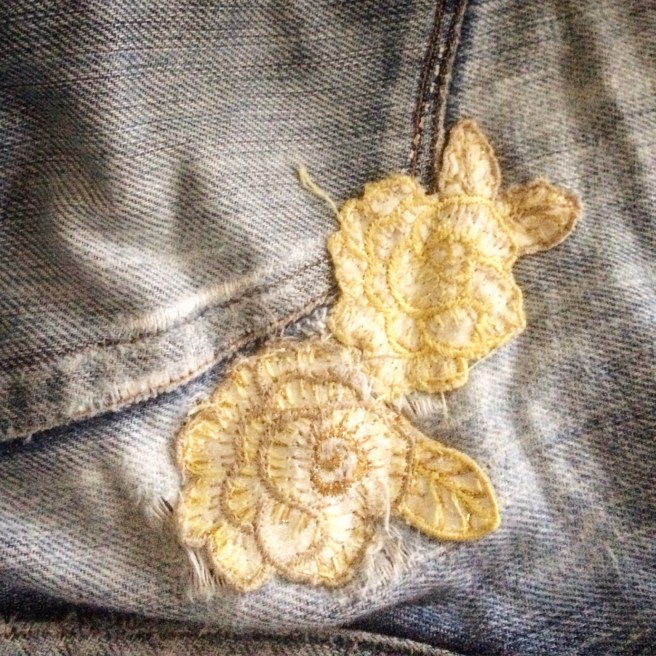
In my mid-twenties I discovered designer jeans. They were my first taste of high-end fashion, bought on a shopping trip with some coworkers, an extravagant splurge—the price of a month’s worth of groceries—but I had to have them. I’d never before experienced an article of clothing that shaped my body. The jeans created a tiny space between my thighs, smoothed out the lumpy part of my hip and created a perfectly flat plain across my stomach. I had to have them. Over the next few years, I invested in a few more pairs, loving each more than the last. Then times got harder, and I stopped buying them. After a decade the ones I had disintegrated, the fabric wearing down to single white threads that still miraculously held their shape, the seams never fraying, but finally the denim itself finally dissolving. When the knees wore out, I cut them into shorts and when the pockets pulled loose, I cover the threadbare spots with vintage appliques. Even the patches are showing signs of wear now. I’ll soon have to throw some of them away. Their value now is that of patina, the beauty of age, the specific loveliness of things cherished beyond damage, kept beyond their prime.

Foraging in the Forest

bead9d5a93e3fe19e90774960c3c4e99.jpg

A few days ago, I went to Bartram Forest and picked wild blackberries. Foraging in the woods is a primitive delight; it also brings fairy tales to mind. In the forest alone, even in bright afternoon sunshine, I feel mystery and danger. But the woods also, contradictorily, calm me. Walking in them, I seem to inhabit my body more fully, especially when searching for the small dark gems of blackberries. At first, they are almost impossible to see, but after an hour or so, my vision becomes attuned to my tasks and can spot the gleaming clusters from a great distance, can even detect if the surface’s sheen indicates juicy ripeness or if the berry has shriveled in the sun. It is impossible to pick the treats without getting pricked and stained, which, of course, makes the bounty more precious.

Choose Your Own Adventure Recipe: Baked Oatmeal

Confident and experienced cooks tend to view a recipe as a series of suggested guidelines, adapting and tweaking as desired, but most people see a recipe as a series of rules, a complex formula that could easily be ruined by one wrong step. There’s nothing wrong with following a recipe precisely, but it can be limiting, expensive, and make cooking feel like a chore instead of a chance to be creative.

So I’ve come up with a solution: choose your own adventure recipes, a series of guidelines with lots of options built in so that you can experiment without worry. This first installment is a dish I recently discovered and have completely fallen for: baked oatmeal.

Baked oatmeal is like the perfect hybrid of a cake and a bowl of oats. It comes out firm and chewy, tastes great hot or cold, and is both healthy enough to eat on a weekday morning and special enough to make for a weekend brunch.

I made my version with fresh strawberries, orange juice, sliced almonds and a dash of turmeric. Choose your own adventure below.

2 cups oatmeal (I used thick cut, use certified gluten free oats to make gf)

2/3 cup nuts and/or seeds (almonds, pecans, walnuts, pepitas, sunflower seeds)

1 tsp. baking powder

1 tsp. cinnamon

1/2 tsp of 2 additional spices/flavorings (nutmeg, cloves, garam masala, cardamom, vanilla, orange zest)

1/3 c. sweetener (brown sugar, maple syrup, honey, agave)

1 1/2 cups liquid (milk, almond milk, orange juice, apple juice)

1 binder (2 eggs, 1/2 c. pumpkin, 2 flax eggs, 1/2 c apple sauce)

2 cups fruit (berries, sliced bananas, diced peaches, chopped apples)

2 tsp. turbinado sugar to finish (optional)

Preheat oven to 375º. Grease a small (8×8) pan or casserole dish. In a nonreactive bowl, mix dry ingredients. Add all remaining ingredients except for fruit and mix again. Scatter half of fruit in bottom of baking dish, pour oatmeal mixture on top. Scatter remaining fruit on surface, follow with turbinado sugar if using. Bake 45 minutes, until edges are browned and texture is firm. Serve hot or cold, with milk, yogurt, and/or additional fresh fruit.


Southwestern Vegan Collards

IMG_2536IMG_2547

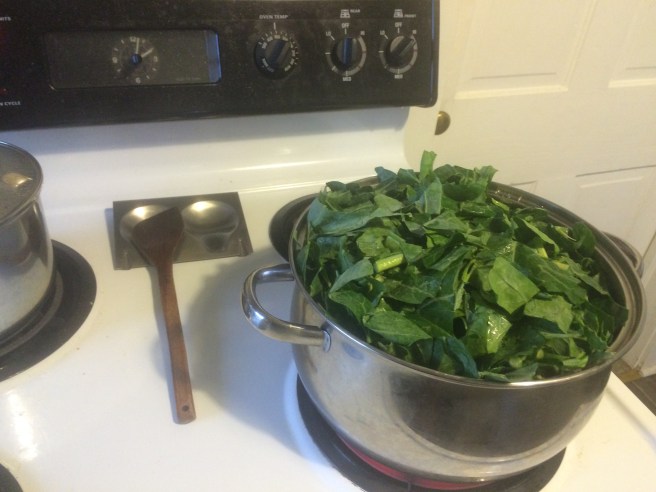
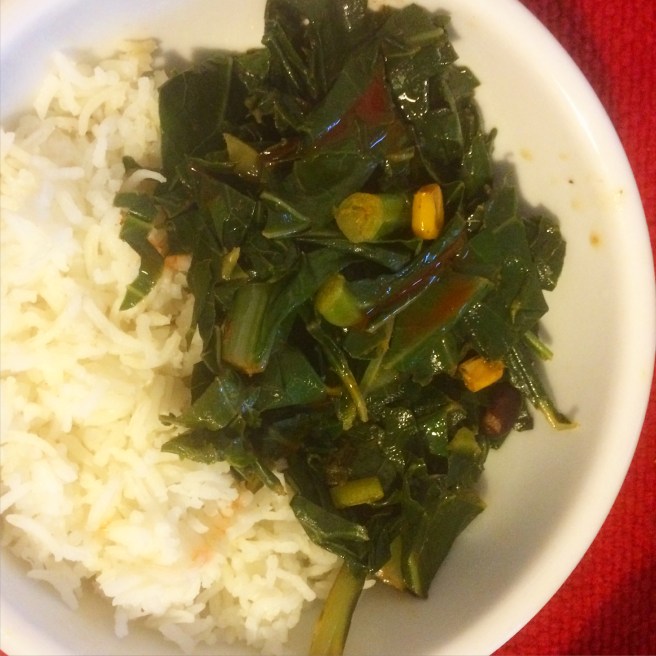
Eating is an essential need and a luxury. Good food makes you feel cared for and happy. Good food that is also good for you feels almost magical. These greens are easy to prepare, delicious and nourishing. Just pair with some rice and if you’re feeling extra decadent, top with some avocado, a splash of hot sauce, or some vegan sour cream.

makes 8

1 lb. collard greens

1 Tbsp. olive oil

2 Tbsp. vegan butter (I used Earth Balance)

3 cloves garlic, minced

3 spring onions, thinly sliced

1 tsp. smoked paprika

1/2 tsp. cumin

3 Tbsp. soy sauce

1 Tbsp. apple cider vinegar

1/4 c. salsa (I used Earth Fare corn and black bean)

Place collards in heavy pot and cover with water. Bring to a boil, then simmer, uncovered fro 15 minutes, stirring occasionally. Drain. In a cast iron skillet combine butter and olive oil over medium heat. When butter is melted and no longer bubbling, add garlic, onions, paprika, and cumin. cook until onions are soft, 3 minutes or so. Add greens and all remaining ingredients. Cook together for 5 minutes, until greens have darkened and look shiny. Serve over rice.


Fairy Land Through the Eyes of Maxfield Parrish

The terms Fairy Tale and Fantasy are often used interchangeably, but they are not synonymous. Fantasy is a place, a specific other world and the stories that belong to it. Oz is a fantasy. Fairy tale is a quality, a mood. Fairy tales exist in outside of time and place—which is part of the reason they translate so well across continents and centuries. The best illustrators of fairy tales understand this and, instead of creating a specific, detailed landscape they impart a mystical quality to familiar spaces. They are intimate and dreamlike.

Who are your favorite fairy tale illustrators?

A Very Sensitive Princess

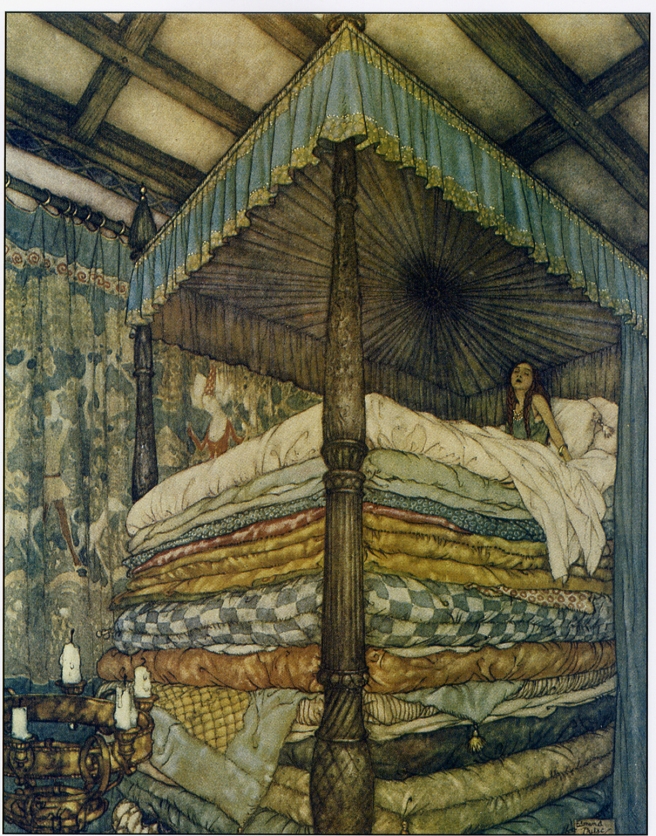
549406190_f5f07eb6d2_oThe fairy tale, The Princess and the Pea is a story about sensitivity. A prince is trying to find a wife, but he wants to be sure she’s a real princess. He tests a potential match by hiding a single dried pea under a pile of twenty mattresses and twenty blankets on top of which the princess sleeps. In the morning the princess says she’s black and blue all over. The prince, taking her delicacy as proof of her royalty, asks her to marry him. It’s an encouraging tale for the perceptive and easily affected. Receptiveness often feels more like a curse than a gift. But like most of the traits that define us, being sensitive has its upsides. A finicky stomach is often accompanied by a love of flavor. Moody temperaments frequently pair with deep empathy. Obsessive tendencies often accompany exceptional insight and analysis.

I started cooking out of necessity when my father was sick and mother was working full time and going to night school. I became quite the foodie. Then I developed IBS and had to rethink my entire approach to nutrition and culinary enjoyment.

Princess and Pea is a refuge for sensitivity. It is a place where I plan to explore my passions: fairy tales, food, and beauty. Most of my recipes are gluten free, many are low FODMAP, some are vegan. Welcome!

Recent Meals

I love food blogs. Love. I follow a bunch: 101 Cookbooks, Smitten Kitchen, Joy the Baker, A Pastry Affair, Minimalist Baker… But to be honest I rarely use recipes unless it’s a special occasion. Instead I throw together a starch, a protein, some veggies and seasoning  and call it a meal. Since garlic and onions tend to upset my stomach, I usually cook without them, relying on hot peppers, soy sauce and spices for flavor. Here are a few recent things I’ve made in no particular order.

  • a mushroom smothered steak with sauteed spinach made with my boyfriend on a recent date night
  • cauliflower tacos topped with chopped spinach and toasted pepitas
  • fruit sushi made for a party I hosted
  • gluten free chicken ramen with corn, spinach and sweet potatoes

What are your favorite thrown together foods?